Skip to content

Practice SSC CGL 2024 Tier 1 Question Paper – 17 Sep 2024 Shift 3 (with Solutions)

100 questions. Choose an option and see at once whether it was right, with the correct answer and a worked solution. No timer, and nothing to submit.

0 of 100 answered

0 correct0 wrong

Answers here are not saved.Sign in to track your progress

  1. Question 1

    CGL24 T1 · 17 Sep 2024 · S3 · Reasoning

    Four letter-clusters have been given, out of which three are alike in some manner and one is different. Select the one that is different. The odd one out is not based on the number of consonants/vowels or their position in the letter cluster.

  2. Question 2

    CGL24 T1 · 17 Sep 2024 · S3 · Reasoning

    Each of the letters in the word 'MUSICAL' is arranged in the English alphabetical order. How many letters are there in the English alphabetical series between the letter which is third from the left end and the one which is third from the right end in the new letter-cluster thus formed?

  3. Question 3

    CGL24 T1 · 17 Sep 2024 · S3 · Reasoning

    Select the option in which the numbers share the same relationship as that shared by the given pair of numbers.

    (NOTE: Operations should be performed on the whole numbers, without breaking down the numbers into its constituent digits. E.g. 13 – Operations on 13 such as adding/deleting/multiplying etc. to 13 can be performed. Breaking down 13 into 1 and 3 and then performing mathematical operations on 1 and 3 is not allowed.)

    \(17 : 67\)

    \(21 : 79\)

  4. Question 4

    CGL24 T1 · 17 Sep 2024 · S3 · Reasoning

    In a certain code language,

    ‘A + B’ means ‘A is the mother of B’;

    ‘A − B’ means ‘A is the brother of B’;

    ‘A × B’ means ‘A is the sister of B’ and

    ‘A ÷ B’ means ‘A is the daughter of B’.

    Based on the above, if ‘J + K ÷ L − T × R’, then how is J related to L?

  5. Question 5

    CGL24 T1 · 17 Sep 2024 · S3 · Reasoning

    Select the set in which the numbers are related in the same way as are the numbers of the following sets.

    (NOTE: Operations should be performed on the whole numbers, without breaking down the numbers into its constituent digits. E.g. 13 – Operations on 13 such as adding /deleting /multiplying etc. to 13 can be performed. Breaking down 13 into 1 and 3 and then performing mathematical operations on 1 and 3 is not allowed.)

    (23, 230, 5)

    (17, 272, 8)

  6. Question 6

    CGL24 T1 · 17 Sep 2024 · S3 · Reasoning

    Select the triad in which the numbers are related in the same way as are the numbers of the given triads.

    (54, 65, 76), (48, 59, 70)

    (NOTE : Operations should be performed on the whole numbers, without breaking down the numbers into its constituent digits. E.g. 13 – Operations on 13 such as adding /deleting /multiplying etc. to 13 can be performed. Breaking down 13 into 1 and 3 and then performing mathematical operations on 1 and 3 is not allowed)

  7. Question 7

    CGL24 T1 · 17 Sep 2024 · S3 · Reasoning

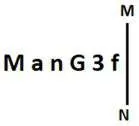
    Select the correct mirror image of the given figure when the mirror is placed at MN as shown below.

    figure

  8. Question 8

    CGL24 T1 · 17 Sep 2024 · S3 · Reasoning

    Three of the following four options are alike in a certain way and thus form a group. Which is the one that does NOT belong to that group?

    (NOTE: Operations should be performed on the whole numbers, without breaking down the numbers into its constituent digits. E.g. 13 – Operations on 13 such as adding/subtracting/multiplying etc. to 13 can be performed. Breaking down 13 into 1 and 3 and then performing mathematical operations on 1 and 3 is not allowed.)

  9. Question 9

    CGL24 T1 · 17 Sep 2024 · S3 · Reasoning

    Select the term from among the given options that can replace the question mark (?) in the following series.

    YL 93, XK 88, WJ 83, VI 78, ?

  10. Question 10

    CGL24 T1 · 17 Sep 2024 · S3 · Reasoning

    Three statements are given, followed by three conclusions numbered I, II, and III. Assuming the statements to be true, even if they seem to be at variance with commonly known facts, decide which of the conclusions logically follow(s) from the statements.

    Statements:

    Some circles are rectangles.

    Some rectangles are squares.

    All squares are triangles.

    Conclusions:

    I. No circle is a triangle.

    II. Some rectangles are triangles.

    III. All rectangles are triangles.

Recommended courses for SSC

All SSC courses
Chat with an academic counsellor on WhatsApp