Question 1
The values of x, for which the functions f(x) = x, g(x) = (√x)² and h(x) = x²/x are identical, is

Programs for CAT & Other MBA Exams
View All →Featured Tools & Quick Tests
Free Aptitude Assessment Test
See where you stand before you pick a course, with an exam-style test and an instant score.
Take Free Test41 questions. Choose an option and see at once whether it was right, with the correct answer and a worked solution. No timer, and nothing to submit.
0 of 41 answered
0 correct0 wrong
The values of x, for which the functions f(x) = x, g(x) = (√x)² and h(x) = x²/x are identical, is
Which of the following is an even function?
The graph of y = (x + 3)³ + 1 is the graph of y = x³ shifted
If f(x) = 5x³ and g(x) = 3x⁵, then f(x).g(x) will be
If f(x) = x² and g(x) = logₑx, then f(x) + g(x) will be
If f(x) = x³ and g(x) = x²/5, then f(x) – g(x) will be
f(x) is any function and f⁻¹(x) is known as inverse of f(x), then f⁻¹(x) of f(x) = 1/(x – 2) is
f(x) is any function and f⁻¹(x) is known as inverse of f(x), then f⁻¹(x) of f(x) = eˣ is
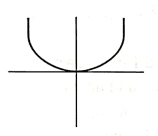
Directions for Questions 9 to 18:
Mark(a) if f(–x) = f(x)
Mark (b) if f(–x) = –f(x)
Mark (c) if neither (a) nor (b) is true
Mark (d) if f(x) does not exist at at least one point of the domain.
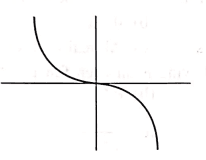
Directions for Questions 9 to 18:
Mark (a) if f(–x) = f(x)
Mark (b) if f(–x) = –f(x)
Mark (c) if neither (a) nor (b) is true
Mark (d) if f(x) does not exist at at least one point of the domain.